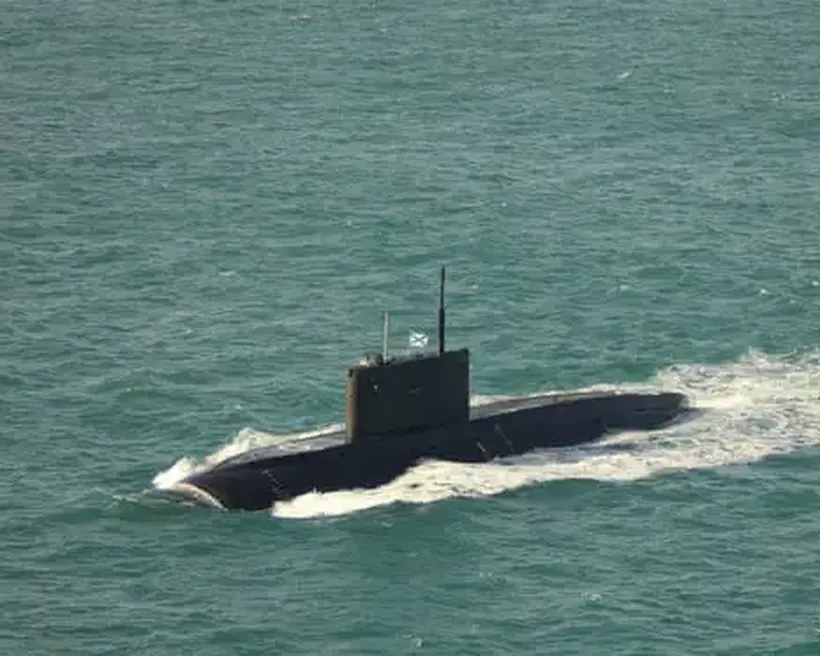
Nato forces chased away Russian ships in Arctic waters that were training to attack undersea cables with a secret sabotage weapon deployed by submersible craft, Reuters has reported, citing western officials. Reuters said its sources declined to detail how the technology works. The confrontation took place near the remote Svalbard archipelago. British and Norwegian officials took their findings to Moscow to show they were aware of the new technology. CIA director John Ratcliffe’s visit to Moscow in August was partly to warn Russia against escalating sabotage operations in Europe, Reuters said, citing two people familiar with the matter. The US has not publicly explained Ratcliffe’s trip.
The Norwegian defence minister, Tore Sandvik, told Reuters: “Through our joint operation, we sent a clear message to Russia that they cannot operate covertly … It is in no one’s interest to escalate tensions in the High North.” Britain’s defence ministry pointed to previous statements about attempted covert activities in and near Norwegian and British waters by Russia’s “deep-sea research directorate”, known by the acronym GUGI, which is under international sanctions. The White House did not respond to a comment request, Reuters said, while the CIA declined to comment.
The British man Joshua Cammidge, arrested as an alleged Russian agent, was part of a plot to sabotage a drone factory in England, prosecutors said on Thursday in a London court. Cammidge, 31, is charged with engaging in conduct to materially assist a foreign intelligence service in carrying out activities in violation of the National Security Act. He did not enter a plea and was returned to custody until due in court again on 25 September. Cammidge was in contact with a suspected representative of the GRU Volunteer Corps, a group controlled by Russia’s military intelligence agency, the prosecution told Westminster magistrates court. Cammidge allegedly provided information on four drone manufacturing sites in his home town of Swindon.
Poland and Ukraine stopped a threat to one of their border crossings and expect they will be further targeted, Donald Tusk said on Thursday, as Russia attacks wartime routes between Ukraine and its neighbouring allies. “Last night, thanks to cooperation between our services and their Ukrainian counterparts, a direct threat to one of the border crossings was averted,” the Polish prime minister said, adding that he had received “a fairly precise report directly from the CIA regarding possible events in the coming months”. Poland also suspended flights at its Lublin and Rzeszów airports on Thursday while its air force conducted what were described as preventive operations related to Russian missile attacks on Ukraine. On Wednesday, drones hit a border crossing between Ukraine and Moldova in the southern region of Odesa, killing two people. “We expect similar actions targeting border crossings with Ukraine in other countries, including Poland,” Tusk said. Russia did not immediately comment.
A Russian strike on a shopping centre in Pavlohrad, central Ukraine, killed at least five people. Another 76 people were injured including children, and other parts of the city were also attacked. The city lies on a supply route for the Ukrainian military connecting central Ukraine to eastern frontlines.
Two people were killed by a Russian attack in Dnipro on the US-owned Bunge sunflower oil factory, one of Ukraine’s five largest food plants with a processing capacity of 1,600 tonnes of oilseeds per day. Another five people were injured. “This is no coincidence, but part of Moscow’s systematic terror campaign against American businesses and economic interests,” said the Ukrainian foreign minister, Andrii Sybiha. Before Russia started the war, Ukraine was the world’s largest exporter of sunflower oil. Russia has carried out attacks on oilseed refineries and vegetable oil terminals while claiming to be targeting military ports and shipping.
Ukraine’s president, Volodymyr Zelenskyy, said Russian forces struck the eastern Donetsk region and the Kharkiv region in the north-east. In the north-eastern city of Sumy, officials said a jet-powered drone tore into a shopping centre – a day after two people were killed and 20 wounded in a similar attack there. Russian officials said Ukrainian drone attacks on the border region of Belgorod killed two people and injured seven. Two Azerbaijani tugboat crew members were killed and two others injured in a Russian attack on civilian shipping in Ukraine’s southern Odesa region, Kyiv’s infrastructure ministry said.
Canada offered support on Thursday to boost Ukraine’s air defences and help replenish its drone stocks, as the countries pledged to deepen their alliance during a visit by Zelenskyy. The support includes C$350m (US$253m) provided through a programme known as Jumpstart run in conjunction with the US. Carney said Ottawa was also offering C$450m in loan guarantees to enhance the Ukrainian energy supply; meanwhile Canada was racing to increase its drone arsenal, from which 30% of Canadian production would go to Ukraine.
Russia is illegally trafficking foreigners to fight in Ukraine who quickly become “cannon fodder”, Amnesty International said on Thursday, citing interviews with prisoners of war deceived into signing Russian military contracts. Among the victims were citizens of Brazil, Colombia, Sri Lanka and South Africa lured to Russia through fake job advertisements. “Then it’s coercion. Their passports are taken away. They are made to sign documents they don’t understand,” said Agnes Callamard, Amnesty’s secretary general. “They are given training they don’t understand [and used as] cannon fodder.”