
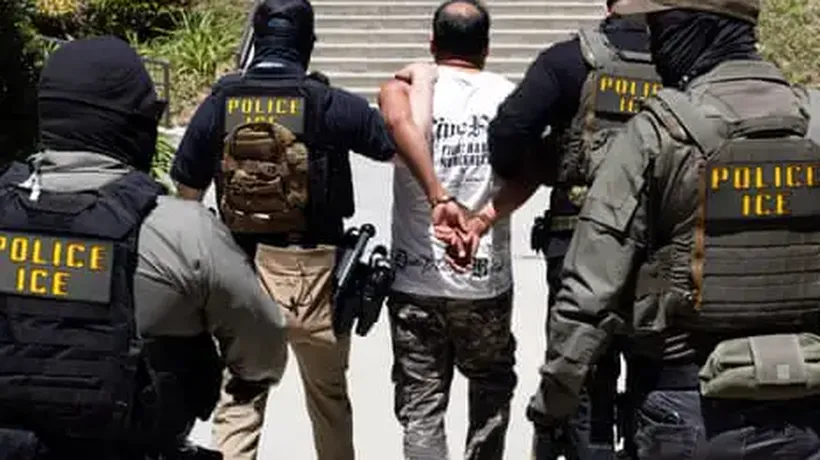
When federal agents fatally shot the US citizen protesters Alex Pretti and Renee Good in Minneapolis in January during the nation’s largest immigration-enforcement operation ever, it marked a turning point for the second Trump administration’s mass deportation campaign.
Donald Trump in his second term had sparked outrage and huge protests with federal immigration officers descending en masse on one Democratic-run city after another in what some leaders called militarized “invasions”. Los Angeles, Chicago, Charlotte, New Orleans, then Minneapolis saw lines of masked and armored officers swaggering into town to conduct street arrests, ambushes of day workers waiting in Home Depot car parks for hire, and neighborhood sweeps. Adults and kids were whisked off to detention and protests met with aggressive deployment of chemical spray, teargas, fists and batons. The killings in Minneapolis were the culmination of what appeared to many to be a federal shock force increasingly out of control while being defended by federal leaders – and public opinion broadly turned against this violence.
There was a change of personnel and the administration flagged a switch to a “quieter” approach to immigration enforcement. But while large-scale theatrics on the streets waned, less visible enforcement is no less aggressive on the ground today and continues to ramp up in multiple ways. Here’s a timeline of how the administration’s anti-immigration campaign has evolved in recent months as Trump races to remove millions of people from the US.
Taken together, these policy changes are less showy but they have ramped up arrests, detentions and the number of people forced to leave the United States – and put millions more at immediate risk of the same. Many of these people have legal status or ongoing cases for winning or upgrading their legal status, or years of crime-free, honorable life in the US, but are being rounded up, often with little access to due process or attorneys who can help. This latest iteration of Trump’s mass deportation campaign is no longer defined by federal agents patrolling cities with smoke canisters in hand. It’s much more insidious but also more ruthless and effective – and it’s happening everywhere.